Showing posts with label Korean. Show all posts

Monday, April 14, 2025

Korean Radish Pancakes (Mujeon) – 무전


These crispy and savory Korean radish pancakes highlight the mellow sweetness of Korean radish (mu), making them a simple yet incredibly flavorful dish. They have a lightly chewy interior with a golden, crispy crust. Serve them with a tangy soy-lemon dipping sauce for the perfect balance of flavors. If you can’t find Korean radish, daikon is a great substitute!  


Ingredients:

- 400 g daikon radish
- 1 small onion, finely sliced  
- 1 tsp salt
- 120 g all-purpose flour 
- 10 g cornstarch  
- 1 egg 
- 60 ml water (adjust as needed)  
- Dash of white pepper  
- 1-2 tbsp sesame seeds
- Neutral oil (for frying)  

Instructions

1. Prepare the Vegetables:
- Peel the onion, cut in half and slice it thinly.  
- Peel the radish and slice it into 3mm disks, then cut into thin matchsticks of the same thickness.  
- Place the vegetables in a bowl, sprinkle with salt, and let sit for 10 minutes to draw out moisture.  
2. Make the Batter:
- Add flour, cornstarch, egg, and water to the vegetables.  
- Stir until well combined. 
- If the batter is too dry, gradually add water until you reach a thick but spreadable consistency. 
3. Fry the Pancakes: 
- Heat 1-2 tbsp oil in a pan over medium heat.  
- Scoop 1-2 tbsp of the batter into the pan and spread it into a thin pancake.
- Sprinkle sesame seeds on top.  
- Cook for 2-3 minutes until golden brown, then flip and cook for another 2-3 minutes until crispy.  
- Repeat with the remaining batter, adding more oil as needed.  
4. Serve & Enjoy:  
- Serve the pancakes warm with dipping sauceon the side.  

Wednesday, January 29, 2025

Buchujeon - Korean Chive Pancake


Buchujeon (부추전) is a popular Korean savory pancake made primarily with garlic chives (buchu). It's a type of jeon (Korean pancake), known for its crispy edges and soft, flavorful center. Buchujeon is often enjoyed as an appetizer, side dish, or snack and pairs exceptionally well with a dipping sauce made of soy sauce, vinegar, and a bit of chili.
Buchujeon is a versatile dish that's often enjoyed during the rainy season in Korea, as the sound of frying pancakes is said to mimic the sound of raindrops. It's also popular during family gatherings, parties, and Korean holidays like Chuseok (Korean Thanksgiving). Additionally, it's a beloved dish to pair with makgeolli (Korean rice wine) for a traditional, comforting meal.
Whether served as an appetizer, a side dish, or a light meal, Buchujeon is loved for its simplicity, savory flavor, and satisfying crunch.

You can also add an egg to the batter. I checked a few recipes, and they were all vegan, so they skipped the egg. However, it was mentioned that adding an egg is optional as it makes the batter richer in taste. It's super easy to make, and you can also add other ingredients like grated carrots, zucchini, or even seafood for extra flavor.


Ingredients

- 90g All-purpose flour
- 15g Cornstarch
- 15g Rice flour
- 2g Salt 
- 100g Garlic chives
- 5g Soy sauce 
- 240g icy cold water 
- 1 egg (optional)
- 20g Gochujang (optional for spicy version)

Instructions:

1. Prepare the Vegetables:
- Cut the garlic chives into 3-4cm pieces.
2. Make the Batter:
- In a large mixing bowl, combine the flours with salt, egg and cold water.
- Add soy sauce and gochujang.
- Mix lightly until just combined. The batter should be thin.
- Gently fold in the garlic chives.
3. Cook the Pancakes:
- Heat 1 tablespoon of oil in a non-stick pan over medium heat.
- Ladle some of the batter into the pan and spread it out evenly into a thin, round pancake.
- Cook for 2-3 minutes until the edges turn light golden brown. If it browns too quickly, reduce the heat to medium-low.
- Flip the pancake, add a bit more oil around the edges if needed, and press it down gently with a spatula.
- Cook the other side for another 2 minutes until golden brown.
- Repeat the process with the remaining batter.
4. Serve:
- Serve the Buchujeon hot with the dipping sauce on the side.

Monday, December 2, 2024

Gochujang Chicken Dumplings


These dumplings combine the bold, spicy flavors of gochujang (Korean red chili paste) with tender chicken, wrapped in delicate dumpling wrappers and steamed to perfection. Perfect for a snack, appetizer, or main course, these dumplings are packed with flavor and incredibly satisfying.
These Gochujang Chicken Steamed Dumplings offer a perfect balance of savory, spicy, and slightly sweet flavors, bringing Korean-inspired flair to a classic dish!

Ingredients (16-20 Dumplings): 

For the Wrappers:

- 150g all-purpose flour
- 90ml hot water
- Pinch of salt

For the Filling:

- 300g chicken breast
- 1 tablespoon sesame oil
- 2 tablespoons gochujang paste
- 2 tablespoons soy sauce
- 1 tablespoon rice vinegar
- 2 tablespoons honey

Instructions:

1. Prepare the Filling:
- Place the chicken breast in a pot, cover with water, and cook until fully cooked through.
- Shred the chicken using two forks, then add sesame oil, gochujang, soy sauce, rice vinegar, and honey. 
- Mix until well combined.
2. Prepare the Dough:
- In a medium bowl, combine the flour and a pinch of salt. Gradually add hot water while mixing with a spatula until a shaggy dough forms.
- Knead the dough for 4-5 minutes until smooth.
- Place the dough in a bowl, cover with plastic wrap, and let it rest at room temperature for 30 minutes to 2 hours.
3. Roll the Dough:
- After resting, divide the dough into 16-20 equal parts. Lightly dust each piece with cornstarch.
- Roll each portion into a small circle, about 6-7 cm in diameter. Dust with cornstarch as needed to prevent sticking.
4. Assemble the Dumplings:
- Place a tablespoon of the chicken filling in the center of each wrapper.
- Pleat the edges of the wrappers around the filling to seal the dumplings.
- Arrange the formed dumplings on a plate lined with parchment paper. Repeat with the remaining wrappers and filling.
5. Steam the Dumplings:
- Bring a pot of water to a boil. 
- Place the dumplings in the steamer, cover, and steam for 10 minutes.
- Once cooked, carefully remove the lid to release the steam.
- Serve hot with soy sauce on the side.

Monday, August 12, 2024

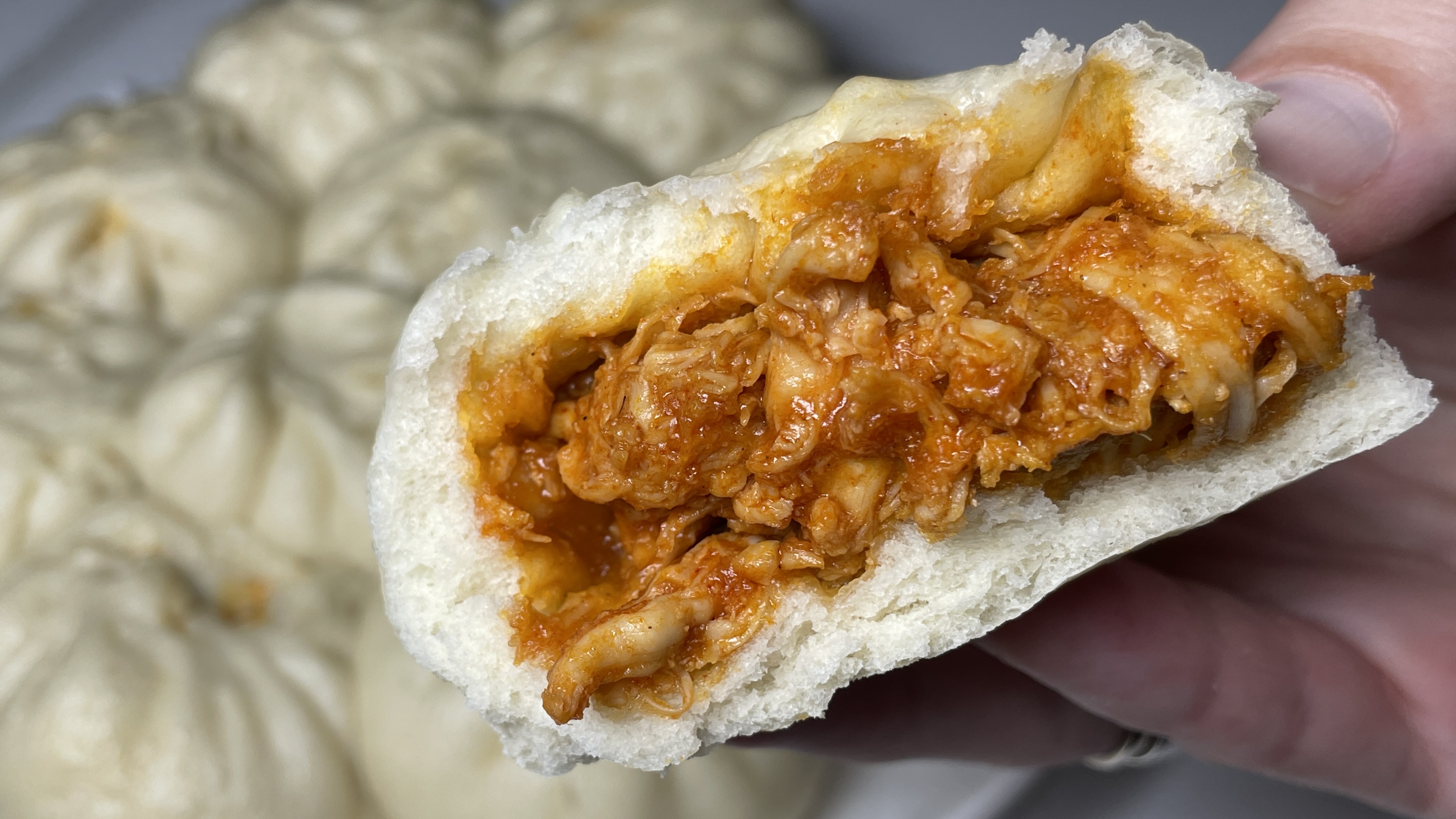
Bao Zi - Steamed Buns With Gochujang Chicken Filling


Steamed buns, are a type of filled bun or bread-like dumpling in various Asian cuisines. They are a popular breakfast item and can be found in dim sum restaurants, street food stalls, and home kitchens. Baozi can be filled with a variety of ingredients, including meats, vegetables, and sweet fillings. 
This time with a Korean-style filling—gochujang chicken. The filling is a bit spicy, perfect for me, but you can adjust the gochujang paste to suit your taste.
It's a good way to use up any leftover meat, for example, from chicken soup.

Ingredients (10 Buns)

Dough:

- 4g active dry yeast
- 10g granulated sugar 
- 175 ml lukewarm water 
- 290 g bread flour

Filling:

- 350g boneless, skinless chicken thighs / breast 
- 1 tablespoon sesame oil
- 2-3 garlic cloves, minced
- 2 tablespoons gochujang paste
- 2 tablespoons soy sauce
- 1 tablespoon rice vinegar
- 3 tablespoons honey

Sauce:

- 1 tablespoon chili oil
- 1 tablespoon toasted sesame seeds
- 2 scallions (spring onions), finely sliced
- Fresh cilantro (coriander)

Instructions

1. Make the Chicken:
   - Cook, bake, fry, or use leftover chicken meat, according to your preference.
   - Let the meat cool and then shred it with forks.
   - Add all the seasonings and stir until combined.
2. Make the Dough:
   - Combine flour, yeast, salt, and water. Knead the dough for 8-10 minutes until soft and smooth.
   - Transfer to a greased bowl, cover, and let the dough rest for an hour.
   - Once risen, deflate and divide the dough into 10 pieces.
   - Roll each piece into a ball, flatten, and use a rolling pin to roll into 10cm circles.
   - Place chicken filling in the center, pleat, and seal.
   - Lay the buns on parchment paper, keep distance to prevent sticking together.
3. Steam the Buns:
   - Rest the buns, covered, for 30 minutes.
   - Steam over boiling water for 10 minutes until puffed.
   - Let rest, covered, for an additional 5 minutes to prevent collapsing.
4. Serve:
   - Garnish with chili oil, sesame seeds, scallions, and cilantro if desired.
   - Freeze leftover buns and steam to heat them up when desired.

Sunday, July 7, 2024

Korean Marinated Eggs - Mayak Gyeran


Korean marinated eggs, also known as "Mayak Gyeran" (마약계란), are a popular side dish or snack in Korean cuisine. "Mayak" means "drug" in Korean, and the name is a playful reference to how addictive these eggs are due to their delicious flavor. 
Typically, the eggs are cooked until the yolks are just set but still slightly soft (jammy eggs) and kept in a marinate.
The marinated eggs can be served as a side dish with rice, added to ramen, or enjoyed on their own.
These marinated eggs are known for their rich, umami flavor and the delightful combination of the soy-based marinade with the creamy texture of the yolk. They are often found in Korean households and can be a great addition to various meals.

Ingredients:

- 6 eggs
- 30g white vinegar
- 120ml soy sauce
- 120ml water
- 80g brown sugar or honey
- 4 garlic cloves, chopped
- 40g yellow onions, chopped
- 4 scallions, chopped: 
- 1 jalapeno, chopped (optional)
- 1 red chili, chopped (optional)
- 1-2 Thai chilis, chopped (optional, for extra heat)
- 1 tbsp toasted sesame seeds:
- Sesame oil (for garnish)

Instructions:

1. Boil the Eggs:
   - Add enough water to a pot to cover all the eggs. Bring the pot of water to a boil.
   - Add the vinegar to the boiling water, then gently drop in the eggs. Boil the eggs for 6 minutes for soft-boiled eggs.
   - After 6 minutes, remove the eggs from the pot and transfer them to an ice bath. Let the eggs cool completely for about 5 minutes in the ice bath.
2. Make the Marinade:
   - In an airtight glass container, combine the chopped garlic, scallions, onions, peppers, soy sauce, honey or sugar, water, and sesame seeds. 
   - Stir all the ingredients together with a spoon.
3. Marinate the Eggs:
   - Gently crack and peel all the cooled eggs. Place the peeled eggs into the marinade.
   - Cover the container with a lid and let the eggs marinate for at least 6 hours in the fridge. Overnight marination is best for optimal flavor.
4. Serve:
   - Serve the marinated eggs with a bowl of warm rice, a drizzle of sesame oil, and some of the marinade sauce.

Sunday, March 31, 2024

Quick Cucumber Kimchi


Cucumber kimchi, is a Korean side dish made by fermenting cucumbers with a spicy seasoning mixture. You can let them ferment for a few days to develop their characteristic tangy and spicy flavor. Cucumber kimchi is a refreshing and crunchy side dish that pairs well with rice and other Korean dishes.

Ingredients

- 250g cucumbers
- 1 teaspoon salt
- 2-3 cloves garlic, finely chopped
- 2 scallions, white and light green parts only, finely chopped
- 10g fresh ginger, peeled and finely chopped
- 15ml rice vinegar
- 10g Korean chili powder
- 10g sugar
- 10ml fish sauce

Instructions

1. Prepare Cucumbers:
   - Cut the cucumbers in half lengthwise and then crosswise into half moons.
   - Place the cucumber slices in a medium bowl and mix thoroughly with salt.
   - Let the cucumbers stand at room temperature for about 30 minutes to allow the salt to draw out excess moisture.
2. In a separate bowl, combine the finely chopped garlic, scallions, ginger, rice vinegar, Korean chili powder, sugar, and fish sauce. Mix well to combine all the ingredients.
3. After 30 minutes, drain the cucumbers using a colander or sieve, discarding the liquid.
4. Add the drained cucumbers to the prepared vinegar mixture in the bowl.
5. Stir the cucumbers into the vinegar mixture until they are evenly coated with the flavorful dressing.
6. Cover the bowl with plastic wrap or a lid and refrigerate the cucumber salad for 12 to 24 hours before serving. This allows the flavors to meld together and the cucumbers to absorb the marinade.
7. Once chilled and marinated, serve the spicy Korean cucumber salad as a refreshing side dish or appetizer.

Friday, September 22, 2023

Cubed Radish Kimchi


Cubed Radish Kimchi is a delightful and easy-to-make Korean side dish that adds a burst of spicy and tangy flavors to your meals. Made with crisp radish cubes, this kimchi is a perfect balance of heat and freshness, creating a vibrant accompaniment to various dishes.

Ingredients

- 600g radish, cubed
- 2 teaspoons salt
- 2 teaspoons sugar
- 15ml fish sauce
- 30g Korean hot pepper flakes (gochugaru)
- 1 stalk of green onions, chopped
- 3-4 garlic cloves, minced
- 0.5 teaspoon minced ginger

Instructions

1. Peel and cube the radish into bite-sized pieces.
2. In a mixing bowl, toss the cubed radish with salt and sugar.
3. Allow the radish to sit for 30 minutes to release water. After 30 minutes, save 1/3 of the released juice.
4. In a separate bowl, combine the fish sauce, Korean hot pepper flakes (gochugaru), chopped green onions, minced garlic cloves, and minced ginger.
5. Add the saved 1/3 of the radish juice to the kimchi seasoning mixture and stir well.
6. Add the seasoned radish cubes to the kimchi seasoning mixture and mix until the radish is evenly coated.
7. Carefully transfer the seasoned radish mixture into a clean glass jar.
8. Press down on the radish to remove any air bubbles and ensure it's tightly packed in the jar.
9. Leave the jar at room temperature for a day or two to kickstart the fermentation process. After that, store it in the refrigerator. 
10. Once the radish kimchi has fermented to your liking, it's ready to be served as a flavorful side dish.

Saturday, January 29, 2022

Steamed Korean Pear with Dates and Ginger


This simple and healthy dessert is not only sweet and soft, making it perfect for kids, but it's also traditionally considered an Asian remedy for soothing coughs and sore throats. The tender, fragrant pear stuffed with dates, ginger, and honey is a comforting treat that combines both pleasure and health. 

Ingredients

- 1 Korean pear
- 2-3 dates (pitted, if desired)
- 1-2 slices of fresh ginger
- 2 tbsp honey

Instructions

1. Prepare the Pear:
   - Wash the Korean pear thoroughly under running water to remove any dirt.
   - Slice off the top of the pear, about 1-2 cm from the stem, to create a "lid." Set this top aside.
   - Use a spoon or a small paring knife to carefully scoop out the core and seeds from the pear, creating a hollow cavity in the middle. Be careful not to puncture the bottom of the pear.
2. Prepare the Filling:
   - Remove the pits from the dates if necessary, then chop them into smaller pieces if they are large.
   - Place the dates, ginger slices, and honey inside the hollowed pear. You can slightly layer the ingredients to ensure even distribution of flavors.
3. Steam the Pear:
   - Place the stuffed pear (with the top placed back on if you like) into a steamer basket or on a steaming tray.
   - Set the steamer over boiling water, cover, and steam the pear for about 1 hour, or until it becomes tender and easy to pierce with a fork.
4. Serve:
   - Carefully remove the steamed pear from the steamer using tongs or a spatula (it will be hot).
   - Serve the pear warm, as is, or scoop out the tender fruit and the infused filling. You can drizzle any remaining juices from the steaming over the pear for extra flavor.

Notes:

- Korean Pear: Korean pears are larger, rounder, and crisper than regular pears. Their naturally sweet and juicy flavor makes them perfect for steaming.
- Variations: You can experiment with the filling by adding goji berries, cinnamon sticks, or even walnuts for extra texture and nutrition.
- Health Benefits: This recipe is often used as a natural remedy for soothing sore throats and coughs, especially during cold weather. The combination of ginger and honey provides warmth, while the dates add a nourishing sweetness.