Sunday, September 18, 2022

What is a Mooncake?


What is a moon cake?

A mooncake (月餅) is a traditional bakery product prominently enjoyed during the Mid-Autumn Festival (中秋節) in various Asian countries. This festival revolves around lunar appreciation and moon watching, with mooncakes standing as a revered delicacy exchanged among friends and family during the celebrations.

Mooncakes typically take the form of round pastries with a sumptuous and thick filling, often crafted from red bean paste or lotus seed paste, encased in a delicate 2–3 mm crust. Some variations may feature yolks from salted duck eggs, symbolizing the full moon. Traditional mooncakes bear imprints on the top, showcasing Chinese characters symbolizing "longevity" or "harmony," along with the bakery's name and the specific filling. Additional artistic touches may include imprints of the Moon, Lady Chang'e on the Moon, flowers, vines, or a rabbit—symbolic of the Moon. Mooncakes play an integral role in the cultural and culinary experience of the Mid-Autumn Festival, enriching the festivities with their symbolic meanings and delightful flavors

Traditional mooncake fillings

Lotus seed paste (蓮蓉)

Considered by some to be the original and most luxurious mooncake filling. White lotus paste is even more premium. Sometimes, white kidney bean paste is used as a filler due to the high price of lotus paste.

Sweet bean paste (豆沙)

There are various pastes commonly used as fillings in Chinese desserts. While red bean paste made from azuki beans is the most common worldwide, regional preferences exist for bean paste made from mung beans or black beans.

Jujube paste (棗泥)

This sweet paste is made from ripe jujube (date) fruits. It has a dark red color, a slightly fruity/smoky flavor, and a slightly sour taste.

Five kernels (五仁) or mixed nuts

A filling made of coarsely chopped nuts and seeds, held together with maltose syrup. Different regions use various nuts and seeds such as walnuts, pumpkin seeds, watermelon seeds, peanuts, sesame seeds, or almonds. Candied winter melon or rock sugar pieces are often added for additional flavoring.

Mooncake crusts

Mooncake crusts vary widely depending on the region where they are produced. Most regions have many types of fillings but only one type of crust. While vegetarian mooncakes may use vegetable oil, many mooncakes use lard. 

The most popular types of crusts are:

Chewy

This crust, commonly used in Cantonese-style (Hong Kong style) mooncakes, has a reddish-brown tone and glossy sheen. It is made using a combination of thick sugar syrup, lye water, flour, and oil, resulting in a rich taste and a chewy yet tender texture. Maltose syrup can be added to increase chewiness.

Flaky

Flaky crusts are indicative of Suzhou- and Taiwan-style mooncakes. The dough is made by rolling alternating layers of oily dough and flour that has been stir-fried in oil, resulting in a texture similar to puff pastry.

Tender

Mooncakes from certain provinces of China, such as Shanghai-style mooncakes, have a tender crust instead of a flaky or chewy one. The texture of this crust is similar to the shortcrust pastry used in Western pie crusts or tart shells. It is made with a mixture of sugar, oil, flour, and water. This type of crust is also commonly used in other types of Chinese pastries, such as egg tarts.

Crumbly

Yunnan-style mooncakes have a dense, crumbly crust made using a hot water crust pastry that combines different kinds of flour with oil, salt, and hot water. This type of crust is uncommon in other regions.

Less traditional types of mooncake crusts can be made with:

Glutinous rice

This crust has a texture similar to mochi and is known colloquially as "snowskin mooncakes".

Jelly

A crust made from gelling mixtures such as agar, gelatin, or konjac, flavored with a wide variety of fruit flavors.

Left: Hong Kong style mooncake with banana filling
Right: Taiwanese style mooncake with red bean paste and salted egg yolk

Thousand layer mooncake with taro and egg yolk
Photo by: whisknfold.com

No bake mooncakes with outer layer made of jelly
Photo by: eatwhattonight.com

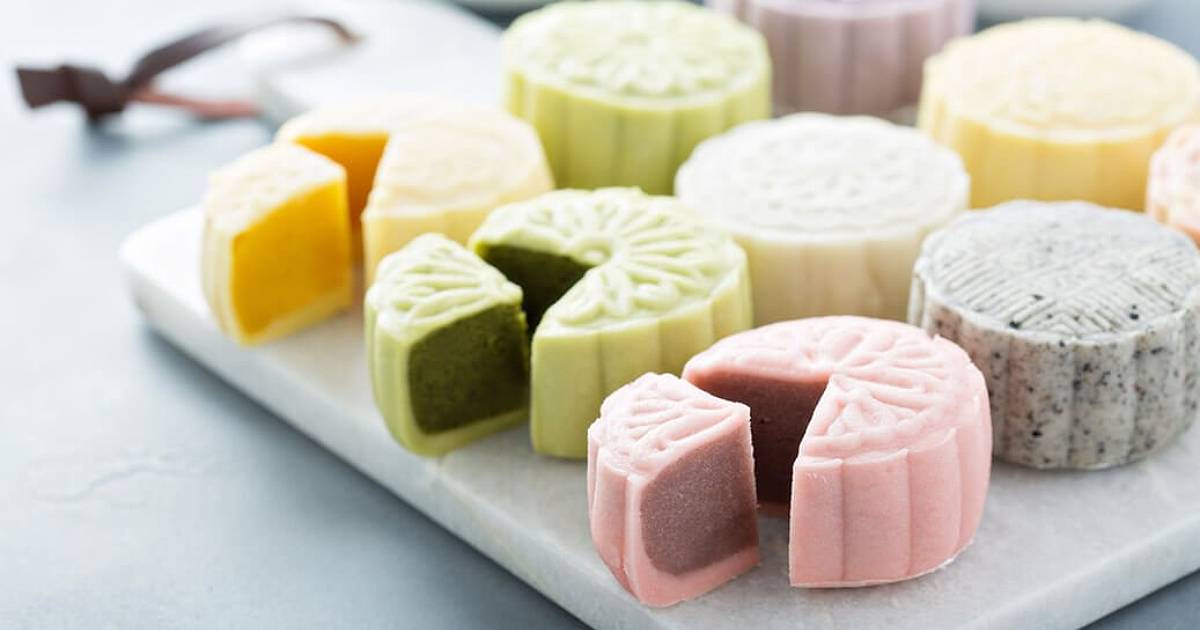
Snow skin mooncake

Snow skin mooncakes are a variation of traditional mooncakes originating from Hong Kong but now popular in several Asian countries including Macau, Mainland China, Taiwan, Vietnam, Singapore, Malaysia, and Indonesia. Unlike traditional mooncakes that are baked, snow skin mooncakes are not baked and are typically enjoyed cold.

Emerging in the 1960s as an alternative to traditional mooncakes, snow skin mooncakes were created by a bakery in Hong Kong to address concerns about the high sugar and oil content in traditional mooncakes. To reduce the fat content, the bakery used fruit fillings and reduced the oil content in the crust. By the 1970s, snow skin mooncakes gained popularity and were also known as "crystal mooncakes" (水晶月饼). The term "Bing Pi Yue Bing" (冰皮月饼) appeared in advertisements in the early 1980s.

The crust of snow skin mooncakes is made from glutinous rice, similar to the crusts used in mochi ice cream or yukimi daifuku. These mooncakes are typically white in color and served cold, hence the name "snow skin." However, they can have other colors due to added flavors in the crust.

Snow skin mooncakes offer a variety of fillings, including mung bean paste, fruit, green tea, jam, strawberry, chocolate, coffee, and cheese. Other popular flavors include durian, sesame, mango pomelo sago, and purple yam. These diverse fillings contribute to the wide range of flavors and textures found in snow skin mooncakes, making them a beloved treat during the Mid-Autumn Festival and beyond.
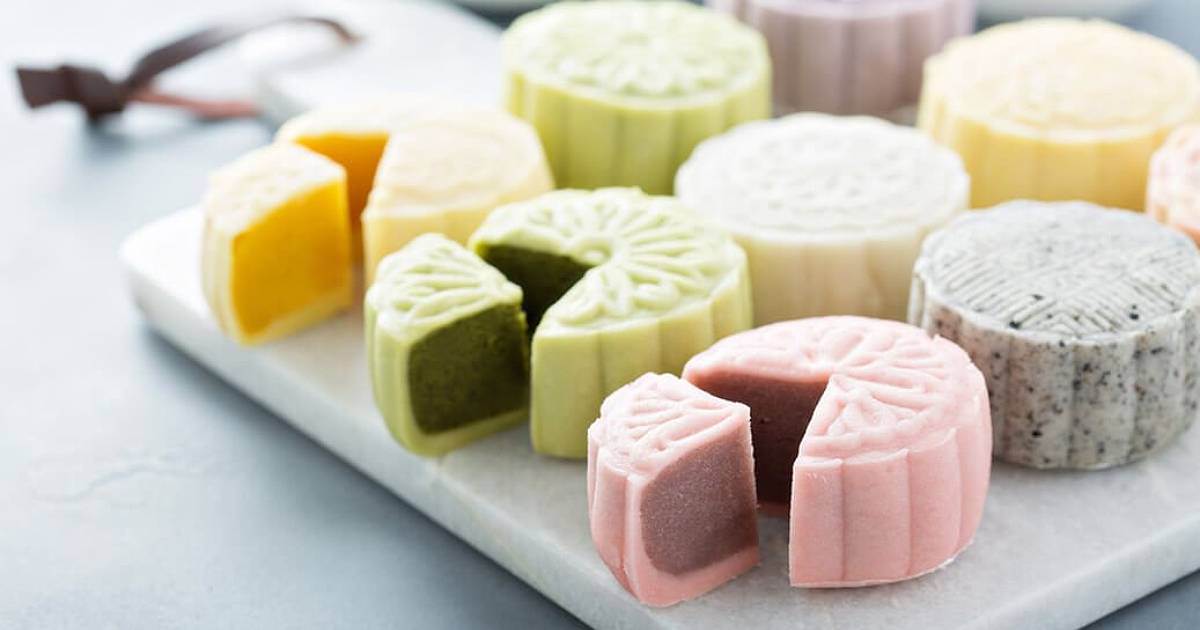
Snow skin mooncakes
Photo by: eastcoastpodiatry.sg

Saturday, September 17, 2022

Polish Ingredients I Still Miss in Taiwan

When people ask me what I miss most about Poland, they often expect answers like family, castles, snowy winters, or Christmas markets. Of course I miss all of those things.

But after living in Taiwan for many years, I've discovered that sometimes the things you miss most are much smaller. Sometimes it's a particular smell coming from your grandmother's kitchen. Sometimes it's a flavor you grew up with and took for granted until you moved halfway around the world.

Taiwan has amazing food. In fact, one of the things I love most about living here is the incredible variety of fresh produce, night market snacks, and local specialties.
Still, there are a few ingredients from Poland that I regularly wish I could find more easily.

1. Poppy Seeds

This is probably the ingredient I miss the most. In Poland, poppy seeds are everywhere. We use them in cakes, pastries, rolls, and especially during Christmas.
One of the most traditional Polish Christmas cakes contains huge amounts of ground poppy seeds. For many Poles, Christmas simply doesn't taste like Christmas without them.

Unfortunately, poppy seeds are impossible to obtain in Taiwan - considered a drug!
Whenever I see photos of makowiec (Polish poppy seed roll) from friends back home, I immediately become nostalgic.
Some foods are so closely connected to childhood memories that they are impossible to replace.

2. Marjoram

Marjoram may seem like a simple herb, but it plays an important role in Polish cooking. It's used in soups, stews, meat dishes, and many traditional recipes. For me, the smell of marjoram instantly reminds me of Polish kitchens.
When I first moved to Taiwan, I assumed finding marjoram would be easy. I was wrong...
Of course, Taiwan offers an incredible selection of herbs and spices used in Chinese cuisine, but the herbs common in Central and Eastern Europe can sometimes be surprisingly difficult to find.

3. Split Peas

Polish pea soup, or grochówka, is one of those comforting foods that many people grow up eating. The key ingredient is dried split peas. Whenever the weather turns cooler, I start thinking about making a big pot of traditional Polish pea soup.
Unfortunately, split peas are not something I regularly see where I live in Taiwan. Every now and then I search for them again, hoping that perhaps some store has started carrying them.
So far, no luck.

4. Sorrel

Sorrel is probably one of the most difficult ingredients to explain to people who didn't grow up in Eastern Europe. As a child, I loved sorrel soup. Its slightly sour taste is unlike almost anything else.
In Poland, sorrel can be found fresh during the season and preserved in jars throughout the year.
In Taiwan, however, I have never come across it. Whenever I mention sorrel soup to Taiwanese friends, they usually have no idea what I'm talking about.

5. Proper Polish Pickles

Now, before anyone gets upset, I know Taiwan has pickled vegetables. But they are not the same.
Polish pickles are usually naturally fermented and have a distinctive sour flavor. They're crunchy, refreshing, and served with countless dishes.
Many of the pickled vegetables available in Taiwan tend to be sweeter than what I'm used to.
Every Polish person probably has their own opinion on what makes the perfect pickle, but for me, it's that strong fermented flavor that I miss.

6. Kefir

If you're Polish, chances are you've had kefir countless times. It's one of those products that you don't fully appreciate until you can't find it anymore.
Kefir is refreshing, slightly sour, and incredibly versatile. You can drink it on its own, use it in baking, or enjoy it during hot summer days.
Taiwan has many excellent dairy products compared to when I first arrived, but kefir remains surprisingly difficult to find. Every time I visit Poland, I end up drinking far more kefir than I probably should.

7. Maślanka

If there's one thing that immediately reminds me of Polish summers, it's maślanka. For those who have never tried it, it's a fermented dairy drink that's light, refreshing, and perfect on a hot day.
Many foreigners don't understand why Poles love it so much until they actually try it.
Like kefir, it's one of those products that seems completely ordinary when you're living in Poland and suddenly becomes impossible to replace abroad.

The Yogurt Situation

One thing that surprised me after moving to Taiwan was how many dairy products are sweetened. When I buy yogurt in Poland, finding plain, unsweetened yogurt is easy. In Taiwan, many yogurts contain added sugar or fruit flavoring.
Things have improved over the years, and there are certainly more options available now than when I first arrived. Still, finding exactly the kind of plain dairy products I want can sometimes feel like a treasure hunt.
As someone who enjoys baking and making Polish desserts, this occasionally creates extra challenges.

Seasonal Fruits I Miss

Poland and Taiwan have very different climates, which means very different fruits. Taiwan has incredible tropical fruits that I never had growing up. Mangoes, wax apples, dragon fruit, and lychees are all things I enjoy here.
At the same time, I sometimes miss the fruits I grew up with in Poland. Fresh currants, gooseberries, sour cherries, and certain varieties of plums immediately bring back childhood memories.
Food isn't only about taste. Sometimes it's about memories.

Beetroot: Sometimes Here, Sometimes Not

As a Pole, I simply can't write an article about missing ingredients without mentioning beetroot. Fortunately, beetroot can sometimes be found in Taiwan, especially in larger cities. However, it's nowhere near as common as it is in Poland. Back home, beetroot is a completely normal vegetable that appears in soups, salads, and countless traditional dishes.
In Taiwan, finding it often requires a bit more planning. As someone who loves making barszcz (beetroot soup), I've learned to buy beetroot whenever I happen to see it.

Living Between Two Food Cultures

One of the beautiful things about living abroad is discovering new foods and new traditions. Over the years, Taiwan has introduced me to countless ingredients that I had never seen in Poland. Some have become regular parts of my cooking.
At the same time, moving abroad makes you appreciate the foods you grew up with. The ingredients on this list aren't expensive or luxurious. Most are simple everyday foods that many people in Poland probably don't think twice about.
But when they're no longer available, you realize how important they were.

Living abroad teaches you that sometimes the ingredient you miss most isn't something expensive - it's a simple herb your grandmother used every day.

Wednesday, September 14, 2022

Stir-Fried Mushrooms and Bok Choy


Stir-Fried Mushrooms and Bok Choy is a quick and flavorful dish that combines earthy mushrooms with crisp bok choy, seasoned with garlic, ginger, soy sauce, and oyster sauce. This vegetarian-friendly stir-fry is easy to make and perfect as a side dish or light main course, offering a delightful combination of textures and savory flavors.
Stir-Fried Mushrooms and Bok Choy is a dish commonly found in various East Asian cuisines, including Chinese, Taiwanese, Japanese, and Korean cuisine.

Ingredients

- 2 tbsp oil
- 2 garlic cloves, crushed
- 2 tbsp finely grated ginger
- 100g fresh mushrooms, sliced
- 1 bunch bok choy, leaves separated
- 2 tbsp oyster sauce
- 1 tbsp soy sauce
- 2 tbsp water

Instructions

1. Prepare Ingredients:
   - Crush the garlic cloves and cut the ginger finely.
   - Slice the fresh mushrooms and separate the leaves of the bok choy.
2. Stir-Fry:
   - Heat the oil in a wok or large skillet over medium-high heat.
   - Add the crushed garlic and grated ginger to the hot oil and fry for about 30 seconds until fragrant.
3. Cook Mushrooms:
   - Add the sliced mushrooms to the wok and stir-fry for approximately 2 minutes until they start to soften and release their juices
4. Add Bok Choy:
   - Add the separated bok choy leaves to the wok and continue stir-frying for about 1 minute until the leaves are wilted and the stems are tender-crisp.
5. Seasoning:
   - Pour in the oyster sauce and soy sauce over the vegetables in the wok.
   - Stir well to coat the vegetables evenly with the sauces.
6. Cook Vegetables:
   - Add the water to the wok and reduce the heat to low.
   - Let the vegetables simmer in the sauce for about 2 minutes, allowing them to absorb the flavors and cook through.
7. Serve:
   - Once the vegetables are cooked to your liking and the sauce has thickened slightly, remove the wok from the heat.
   - Transfer the stir-fried mushrooms and bok choy to a serving dish.
8. Enjoy:
   - Serve the dish hot as a delicious side dish or a light vegetarian meal.